₹25,000 cr flows through Kerala in just 15 days of Onam: Varghese Chandy
As Kerala's festive economy accelerates, retail sales are expected to rise 30-40% on the back of premium inventory and tighter discounting, says Chandy, VP, Marketing & Ad Sales, Malayala Manorama
 by
by
Published: Jul 27, 2026 9:28 AM | 5 min read
 Follow Us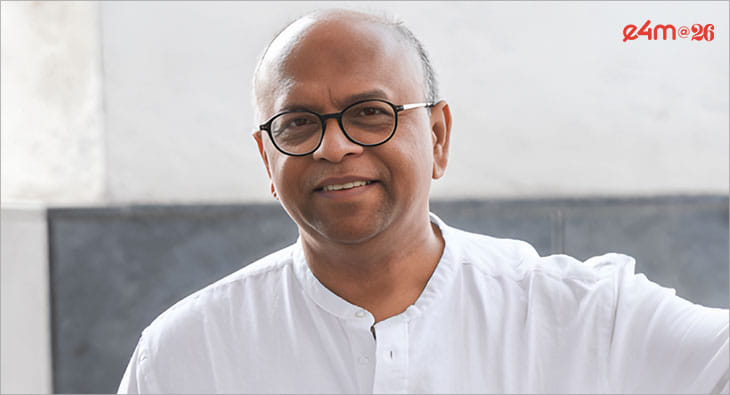

- Kerala's Onam festival initiates a significant economic boost, with consumer spending estimated between ₹20,000 crore and ₹25,000 crore over a 10 to 15-day period, leading to a 30% to 40% increase in retail sales across key categories.
- Print advertising is experiencing a resurgence during the festive season, with expectations of growth in ad spend compared to previous years, despite rising newsprint costs prompting a focus on premium inventory rather than broad price hikes.
- Retail, along with sectors like automobile, jewelry, healthcare, and finance, is driving print advertising, with brands increasingly targeting both local and diaspora audiences through integrated print and digital campaigns.
- High literacy rates and strong readership habits in Kerala contribute to the resilience of print media, making it a vital tool for brands aiming to capitalize on the festive market, particularly during Onam.
As national CMOs fine-tune their Navratri and Diwali plans, Kerala has welcomed its festive cycle. Onam, the state's harvest festival, kicks off India's festive calendar weeks, unlocking a liquidity wave that runs into tens of thousands of crores. To understand what this season looks like from inside the industry, exchange4media spoke with Varghese Chandy, Vice President, Marketing and Advertising Sales at Malayala Manorama, who laid out just how large the opportunity was.
"Over a compressed 10 to 15 day window, Kerala's economy absorbs anywhere between ₹20,000 crore and ₹25,000 crore in consumer spending, with retail sales across key categories climbing 30% to 40% above standard monthly averages," Chandy said.
He pointed to the ad spend numbers behind that surge as well. "Festive ad spend in the state alone crossed ₹1,100 crore in the 2025 to 2026 season, while BEVCO, the state's beverages corporation, logged sales of roughly ₹850 crore," he said, adding that the surge is powered by a mix of Non-Resident Keralite remittances, state-level bonuses and salary advances, and concentrated category buying that sees gold, textile, mobile and appliance retailers pull in up to 40% of their annual sales inside this single month.
Print advertising gathers momentum
Despite a softer start to the year, Chandy believes the festive season has brought back optimism for print advertising. "There was an issue in Q1 due to the war situation," he said. "But with the Onam season starting, we are seeing positive momentum and all our premium positions are already filled, with strong participation from almost all the advertising categories."
He added that the outlook for the season is firmly positive. "Early indications suggest that Onam 2026 print advertising is likely to grow compared to last year, and we are expecting a significant increase compared to 2025 during this Onam season," Chandy said.
Premium inventory over blanket price hikes
Rising newsprint costs have squeezed publisher margins across the industry. However, instead of broad-based rate revisions, publishers are focusing on premium inventory to improve yields. "Though we have additional expenses for the newsprint, considering the current market conditions we haven't changed the prices yet," he said. "Instead we are trying to extract more revenue through premium pages and extra volume."
He explained the thinking behind the approach further. "We seek better yield this Onam season through selective upward revisions in premium inventory and tighter discounting rather than broad based increases," Chandy noted.
Retail leads, while healthcare and finance gain ground
Retail continues to dominate festive print advertising, although several other sectors are contributing to the advertising mix this season. "Retail continues to be at the top to lead, followed by Automobile and Jewellery categories," he said. "Consumer durables, FMCGs and computer companies also remain active participants in Onam print spending."
He also flagged a category shift tied to the season's demographic pull. "With the NRI season on, healthcare and financial sectors are also active," Chandy said, adding that "brands are also focusing on hyperlocal targeting and integrated print plus digital campaigns to maximize returns during the festive season."
"Local clients are dominating but national clients are also contributing substantially, especially Automobile, Consumer electronics and Durables, Smartphones, FMCG and Banking and finance sectors," Chandy said.
He also pointed out a distribution nuance worth noting for national planners. "Durable clients are mostly advertising through the retail giants," Chandy said. "In Kerala, Malayalam print is a high impact medium for reaching consumers during the festive season, and hence strong demand is expected from categories that are closely tied to festive purchases and high value consumer spending."
Extending campaigns beyond Kerala
Given how widespread the Malayali diaspora is, advertisers are also using print, including diaspora-focused editions, to reach Malayalis living beyond Kerala. "Our advertisers do advertise in the Middle East edition as well as in the Metro editions of Malayala Manorama to engage Malayalis living outside the state," he said. "They also use our digital platforms to reach out to the global Malayalee community."
He described this as a deliberate cross-platform play. "This cross platform strategy allows brands to extend their reach to Malayalis outside Kerala while maintaining the credibility and creative impact of print," Chandy said.
Why print remains resilient in Kerala
Chandy also spoke about why Kerala continues to behave differently from other markets when it comes to print. "It remains one of the few places in the country where print readership doesn't just survive, it thrives alongside digital platforms," he said. "High literacy and strong morning reading habits give newspapers like Malayala Manorama an unmatched 60% reach across households. The Malayala Manorama Group gives a total reach of almost 90% of Kerala."
He explained what that reach means at the point of purchase. "When a family plans any consumer durable purchase or a major jewellery expenditure, the print morning paper still serves as the primary validation tool," Chandy said.
Closing out the conversation, Chandy made the case for why brands outside Kerala need to stop treating Onam as an afterthought. "If your brand waits for October to gauge festive demand, you are missing out on early market signals," he said. "Kerala's Onam season is a live laboratory for pricing power, creative resonance, and product demand."
He was equally direct about the payoff for brands that get in early. "When a brand succeeds during Onam, it secures early market share, builds cash reserves, and refines campaign messaging before competitors even launch their Diwali efforts," Chandy said. "The ₹25,000+ crore market is waiting. The brands that win it are the ones that treat Kerala not as a regional line item, but as the engine of their entire festive strategy."
Read more news about Print Media, TV Media, Advertising India, Digital Media, Marketing
For more updates, be socially connected with us onInstagram, LinkedIn, Twitter, Facebook, YouTube & Google News